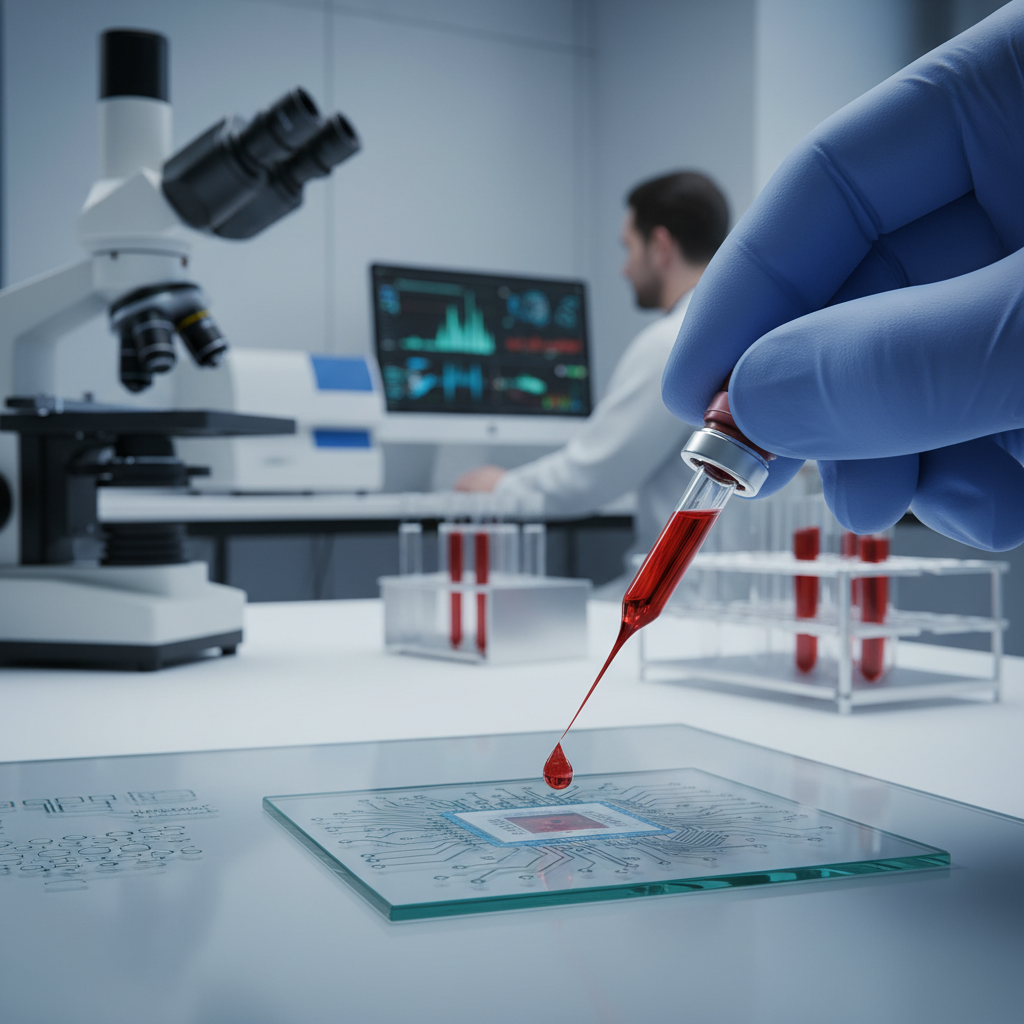
Liquid Biopsy Is Getting Closer to Diagnosing Disease from a Tiny Blood Sample
Liquid Biopsy Is Getting Closer to Diagnosing Disease from a Tiny Blood Sample
Few ideas in modern medicine sound as immediately attractive as this one: detecting disease from a tiny amount of blood.
No invasive biopsy. No need to remove a piece of tissue. No waiting for a tumour to become large or accessible enough to sample directly. Just a small blood test capable of revealing what is going wrong inside the body.
That is the promise of liquid biopsy, one of the fastest-moving fields in diagnostic medicine. And unlike many futuristic-sounding health technologies, this one is no longer just a speculative concept. Liquid biopsy is already being studied seriously for early cancer detection, tumour profiling, monitoring response to treatment and identifying treatment resistance.
Still, the most accurate way to describe the field is more measured than the headline suggests. The evidence strongly supports liquid biopsy as a promising and rapidly evolving technology, particularly in oncology. It does not show that a tiny blood sample can already be used as a broad routine test to detect many unrelated diseases.
The real story is not that medicine has suddenly acquired a universal disease detector. It is that blood-based molecular testing is becoming more sensitive, less invasive and increasingly useful in specific clinical contexts — especially cancer.
What a liquid biopsy actually does
Traditional biopsy depends on tissue. A suspicious lesion is sampled directly and examined under the microscope or analysed molecularly. That remains essential in many areas of medicine.
Liquid biopsy works differently. Instead of sampling the diseased tissue itself, it looks for biological traces of disease that are circulating in the blood. These may include cell-free DNA, circulating tumour DNA, circulating tumour cells, microRNAs, exosomes and other molecular fragments released into the bloodstream.
One of the broad reviews among the supplied references describes this as a fast-developing platform for analysing disease signals using multiple assay types. In cancer, these blood-based approaches may help with early detection, molecular profiling and the tracking of response or resistance over time.
In practical terms, the blood becomes a kind of biological readout — not a complete picture of a disease, but a potentially valuable one.
Why this technology matters so much
The attraction of liquid biopsy lies partly in what it avoids.
It is less invasive than a conventional biopsy, easier to repeat, and often more acceptable to patients. That matters in oncology, where repeated tissue sampling may be difficult, risky or simply impractical. Tumours can sit in places that are hard to reach safely, and their biology may change over time.
A blood test that can be repeated more easily offers something powerful: the chance to monitor disease in motion rather than relying on a single static tissue sample taken at one moment.
This is especially important in cancer care, where clinicians increasingly need to know not only what a tumour looked like at diagnosis, but how it is responding, whether it is evolving, and whether resistance mechanisms are beginning to appear.
That makes liquid biopsy more than just a less invasive diagnostic trick. It potentially turns blood into a tool for following tumour biology as it changes.
What the evidence most clearly supports
The strongest support in the supplied evidence is in cancer, especially pancreatic cancer.
One study used a serum nanosensor assay with very small blood volumes and found that it could identify pancreatic ductal adenocarcinoma with high specificity and moderate sensitivity. That is an important finding because it shows that compact blood-based platforms can, in fact, detect signals associated with disease.
But the same study also points to a more realistic view of where the field is heading. The assay performed better when combined with CA 19-9, an established pancreatic cancer biomarker. Together, they improved stage I detection.
That is a crucial detail, because it suggests liquid biopsy may work best as part of a multi-marker strategy rather than as a standalone universal test. In other words, the future may not lie in one magical blood test that detects everything, but in integrated diagnostic systems that combine different markers to improve accuracy.
Another review on pancreatic cancer screening reinforces this direction by highlighting growing interest in analytes such as circulating tumour DNA, circulating tumour cells, microRNAs and exosomes for earlier diagnosis.
Taken together, these studies support a very strong story about the growing power of blood-based diagnostics in oncology. They do not support the broader claim that a tiny blood sample can reliably detect disease in general across multiple unrelated conditions.
Why the headline goes too far
This is where the distinction between a field’s promise and its proven reach becomes important.
The supplied evidence is concentrated in cancer, not in general disease detection. Even within cancer, one of the most concrete examples is disease-specific. It shows that a blood-based assay can detect pancreatic cancer signals under certain conditions. That is a notable advance. But it is not evidence that a single technology can broadly detect many diseases from a drop of blood in routine clinical care.
That matters because headlines like this can easily create the impression that diagnostic medicine has already leapt into a new era of universal blood screening. It has not.
There are still technical limitations. In very early disease, signal levels may be low, which makes detection harder. There are also biological confounders, such as clonal haematopoiesis, that can complicate interpretation of circulating DNA and potentially blur what is truly tumour-related.
And much of the literature still describes emerging applications rather than mature, large-scale clinical practice.
So while the field is clearly advancing, it is doing so through disease-specific validation, not through a single all-purpose leap.
Why oncology is the natural proving ground
Cancer is where liquid biopsy has found its most convincing role so far.
That is partly because cancers can shed material into the blood in ways that can be measured. It is also because oncology increasingly depends on molecular information. Doctors do not just want to know that a tumour exists. They want to know what subtype it is, what mutations or markers it carries, how it is responding to therapy and whether resistance is emerging.
Liquid biopsy fits naturally into that world. It offers a way to gather some of that information repeatedly without repeatedly sampling tissue.
That could eventually make cancer monitoring less burdensome and more dynamic, particularly in patients who need close follow-up or whose tumours are not easy to biopsy repeatedly.
What this could mean for patients in future
For patients, the near-term promise of liquid biopsy is not a universal answer to diagnostic uncertainty. It is something more practical.
It could mean fewer invasive procedures, more opportunities to monitor disease through simple blood draws, and earlier clues that a treatment is no longer working. It may also help identify some cancers sooner, particularly if used in combination with other biomarkers or imaging in high-risk populations.
That is already a meaningful shift.
It is also more believable than the notion of one blood-drop test replacing existing diagnostic systems. In medicine, major progress often comes through integration rather than replacement. Liquid biopsy is likely to become one more important layer in diagnostic decision-making, not a substitute for everything else.
The real challenge now is validation
The biggest obstacle facing the field is no longer imagination. It is validation.
Each liquid biopsy application must be tested in the specific disease it is meant to detect or monitor. A test that works well in one cancer cannot simply be assumed to work well in another. Different diseases shed different molecular signals, at different stages, and at very different concentrations.
That means the path to clinical adoption will probably be incremental. Cancer by cancer. Marker by marker. Use case by use case.
This is exactly how serious diagnostic medicine should work. Promising tools must show not only that they can detect a signal, but that they improve care in a way that is reliable, practical and meaningful.
Why this story still matters now
Even with all those caveats, liquid biopsy remains one of the most exciting developments in diagnostics.
It reflects a broader shift in medicine towards less invasive, more information-rich testing. It also fits with the move away from one-time, static diagnosis and towards continuous monitoring of disease biology.
That matters especially in cancer, where timing, evolution and molecular change can alter treatment decisions quickly. A blood-based test that captures some of that information more easily than tissue biopsy is not a small improvement. It could eventually reshape how clinicians diagnose, monitor and respond.
The bottom line
Liquid biopsy is bringing medicine closer to the idea of diagnosing disease from a very small blood sample. The evidence supplied strongly supports its growing value in cancer detection, tumour profiling and treatment monitoring.
But the broader headline overstates what has been shown. The current evidence is strongest in oncology, especially in disease-specific applications such as pancreatic cancer. It does not establish a universal blood-drop technology capable of detecting many unrelated diseases in routine care.
That may sound less sweeping than the headline. It is also more useful. Because the real advance here is not a diagnostic miracle. It is the steady, credible progress of a technology that may make disease detection and monitoring less invasive, more precise and more responsive — one validated application at a time.