Citizen science may strengthen health and well-being — but its benefits seem to come more from participation and agency than from a direct ‘treatment’ effect
Citizen science may strengthen health and well-being — but its benefits seem to come more from participation and agency than from a direct ‘treatment’ effect
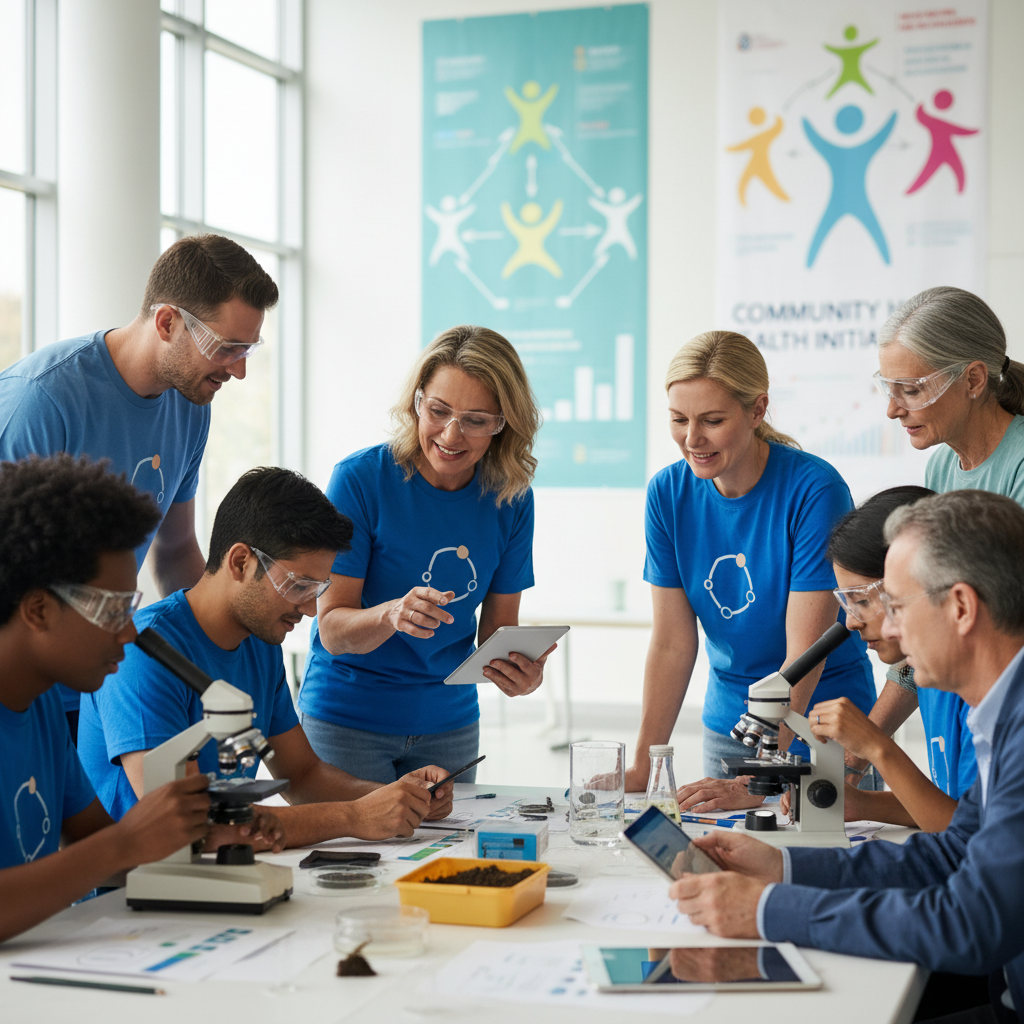
“My head feels clearer.” Phrases like that have immediate appeal because they translate something many people recognise: being involved in a shared project, feeling heard and seeing that your lived experience matters can change how you feel. In health, that feeling is increasingly linked to citizen science, participatory research and community programmes that involve the public not simply as subjects of study, but as partners in producing knowledge.
The idea is attractive and, up to a point, quite plausible. When people help identify local problems, collect data, discuss priorities and push for community change, they are doing more than contributing information. They may also gain voice, increase their sense of control and strengthen social ties — all of which matter for health.
But plausibility is not the same thing as proof. The supplied studies support the broader idea that participatory approaches can strengthen health research, deepen community engagement and, in some settings, improve aspects of well-being and healthy behaviour. What they do not directly prove is that citizen science itself is a clearly established intervention for improving individual health across populations.
What is really at stake in citizen science
In broad terms, citizen science means active involvement by people outside formal academic research in scientific work: collecting observations, mapping problems, interpreting findings, shaping questions and sometimes helping define priorities. In public health, that can range from neighbourhood residents documenting barriers in their communities to groups working with researchers to understand environmental exposures, service access or the local conditions that shape illness.
The most immediate value of this approach is not necessarily clinical. It is social, political and epistemic. Rather than leaving all knowledge production to institutions, citizen science redistributes some of the power to notice, describe and prioritise problems.
That matters because many drivers of health appear first in everyday experience: the bus route that makes it hard to reach care, the unsafe park that discourages walking, the constant noise, the healthy food that costs too much, the lack of places to gather. When citizens are directly involved in health-related research, those realities are more likely to enter the questions being asked and the solutions being considered.
Participation may build something medicine often struggles to measure: agency
One of the most consistent contributions of participatory approaches is the strengthening of agency. In health, that can be highly significant. People who feel able to understand problems, act collectively and influence decisions are often more engaged in care, prevention and public-health action.
The supplied reviews of community-based participatory research suggest exactly that. When communities are involved in a meaningful way, research is more likely to produce relevant, contextual knowledge and more useful public-health decision-making. That does not automatically mean less disease or better clinical outcomes in every case, but it points to something important: health also depends on social power, trust and the ability to shape one’s surroundings.
In that sense, citizen science may not work like a medicine, but it may help create conditions that support health.
What the evidence supports more confidently
The supplied literature supports several broad claims reasonably well. Participatory approaches may:
- strengthen the connection between research and real community needs;
- increase social engagement and a sense of belonging;
- improve the relevance of public-health decisions;
- promote community empowerment;
- and in some settings, support improvements in mental health, physical activity and healthy behaviours.
That last point matters, but it also requires nuance. One of the supplied studies found benefits from a community health empowerment programme, with positive effects on areas such as mental health, physical activity and healthy behaviour. But that study was not a direct citizen-science intervention. It belongs to the same broader family of participatory public-health work, but it is not proof that citizen science itself produces the same outcomes in all contexts.
So the most honest reading is that there is a body of evidence favouring participation as a promising ingredient in public health — without proving that every citizen-science project will directly improve people’s health.
There is a difference between collecting data and changing lives
Not all participation is equal. In some projects, citizens mainly collect data for researchers. In others, they help shape questions, interpret results and push for practical change. That distinction matters enormously.
If participation amounts to supplying unpaid labour to science, any effects on empowerment and well-being may be limited. But when communities gain real influence, the experience may produce something deeper: recognition, usefulness, trust and a stronger link between knowledge and action.
That is probably where headline phrases like “my head feels clearer” make the most sense. Not because citizen science directly treats anxiety, depression or isolation in any universal way, but because meaningful participation can reduce helplessness and strengthen social connection.
And those shifts are not trivial. They sit close to the foundations of health.
Public health is not improved only through clinics — but also through voice
One of the weaknesses in many health debates is that health gets reduced to appointments, medication and tests. All of those matter, of course. But public health also depends on social cohesion, safety, mobility, the built environment, food access, recreation and institutional trust.
That is where participatory approaches become especially interesting. They bring technical knowledge closer to lived experience. A community involved in identifying environmental risks, designing local interventions or evaluating public policy may be better placed to push for changes that are realistic and fair.
This connection to health equity is reflected in the supplied reviews. When populations that are usually under-heard move closer to the centre of research and decision-making, inequalities and vulnerabilities are more likely to be recognised instead of being missed in top-down approaches.
That is not just a methodological detail. It may be part of how better public health gets built.
What still has not been proved
Despite the appeal of the idea, the evidence here is still indirect in relation to the headline. Two of the strongest articles are conceptual or review-based rather than direct outcome studies showing that citizen-science participants experienced measurable health improvement because of participation itself.
The intervention study supplied examined a community health empowerment programme, not a citizen-science intervention in the narrow sense. That strengthens the broader plausibility of the argument, but it does not settle it.
There is also another important limitation: the quote-driven framing in the headline suggests a subjective, lived benefit — “my head feels clearer” — but the supplied evidence does not specifically document that exact outcome among citizen-science participants.
So it would be too strong to say citizen science has been proved to improve people’s health in a direct and general way. What the evidence more safely supports is something narrower: meaningful involvement in health research and community action may promote engagement, empowerment and some well-being-related outcomes, especially when that participation is part of broader local programmes and real-world change.
Why the story still matters
Even without definitive proof of direct clinical benefit, this remains an important story. Partly because it addresses a persistent weakness in modern public health: the distance between those who study problems and those who live them. The greater that distance, the greater the risk of elegant solutions on paper that are weak in practice.
Citizen science tries to narrow that gap. And in doing so, it may generate forms of value that do not immediately appear in biomarkers or conventional clinical metrics. More trust, stronger support networks, better health literacy, community mobilisation and a greater sense of usefulness may be softer outcomes, but they are not insignificant ones.
At a time when loneliness, institutional distrust and social strain affect many communities, that kind of participation may have value in its own right. Not as a replacement for strong health policy, but as part of a more human architecture of health improvement.
The most balanced reading
The supplied evidence supports the idea that participatory approaches, including community-based research and elements of citizen science, can strengthen engagement, relevant knowledge production, empowerment and health equity. It also suggests that community empowerment programmes may improve some outcomes related to mental health, physical activity and healthy behaviours in certain settings.
But the match between that evidence and the headline is imperfect. The available material is stronger support for participatory public health in general than for a direct causal claim that citizen science itself improves individual health.
The most responsible conclusion, then, is this: involving people more directly in health research and community action may support agency, engagement and some aspects of well-being, especially when participation is meaningful and connected to practical change. What cannot yet be said with confidence is that citizen science, on its own, is a proven health intervention across populations.