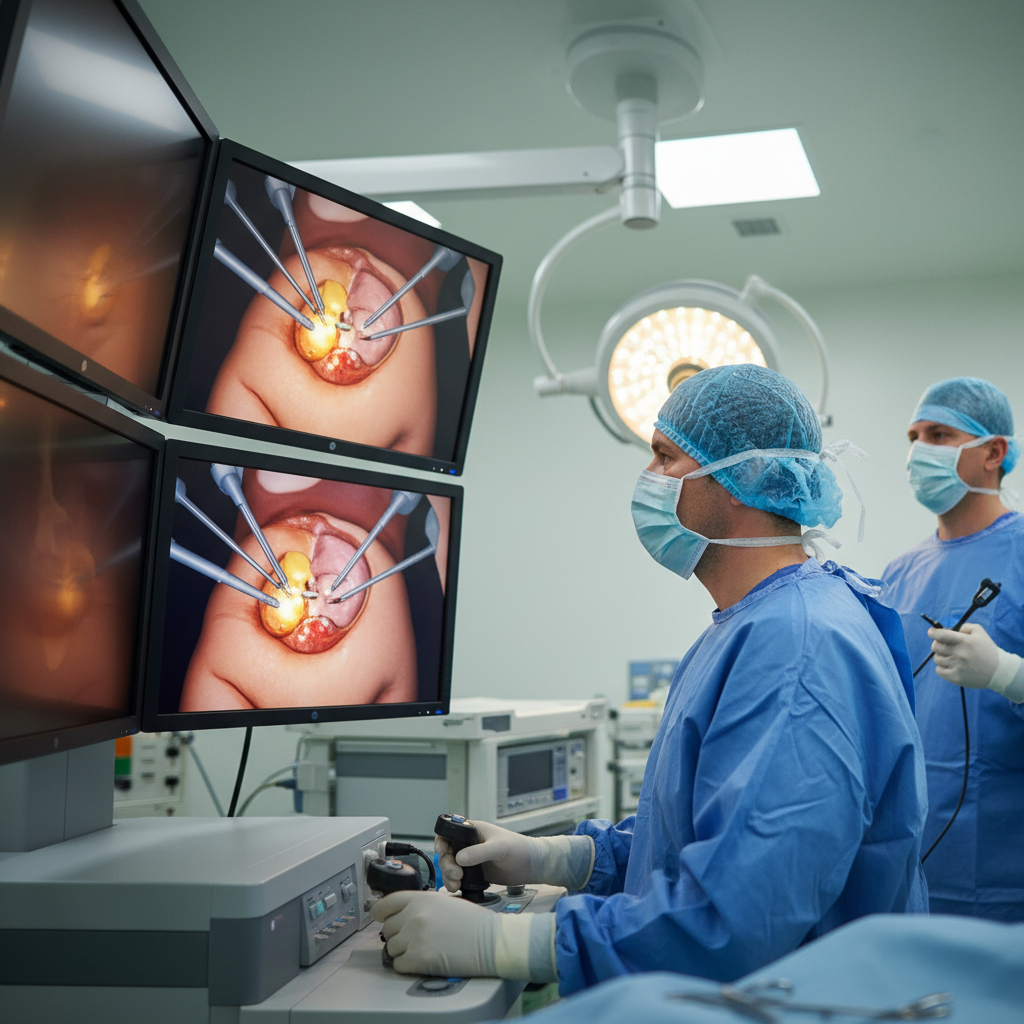
Robotic or laparoscopic surgery may work for gallbladder cancer — but only in carefully selected patients and experienced centres
Robotic or laparoscopic surgery may work for gallbladder cancer — but only in carefully selected patients and experienced centres
Few digestive cancers demand as much surgical caution as gallbladder cancer. It is a relatively uncommon disease, often discovered at an advanced stage or found incidentally after gallbladder removal, and its treatment can involve liver resection, lymph-node dissection, and careful oncologic planning. In that context, open surgery has long been regarded as the safer and more dependable option.
That is why the new headline about minimally invasive surgery for gallbladder cancer stands out. The idea that laparoscopic or robotic techniques can be successful in this setting should not be read as a simple replacement of conventional surgery. The safest reading of the supplied evidence is more specific: these approaches may be feasible, safe, and oncologically reasonable in carefully selected patients, provided they are done in centres with real expertise in hepatobiliary cancer surgery.
That qualification changes the whole story. This is not about a new technology automatically overtaking open surgery. It is about specialisation, surgical volume, and choosing the right patient for the right operation.
Why gallbladder cancer has always required so much surgical caution
Gallbladder cancer presents a very different challenge from routine gallbladder surgery. It is not enough simply to remove the organ. Depending on the stage and extent of disease, treatment may require an extended resection, clear oncologic margins, management of the liver bed, and removal of regional lymph nodes.
There has also been a longstanding concern about two risks:
- incomplete cancer resection;
- and tumour spread during minimally invasive procedures.
Those concerns help explain why open surgery dominated this field for so long. In cancer surgery, especially when anatomy is complex and the tumour can be aggressive, the priority is not to perform the smallest operation. It is to perform the right one.
What the current evidence actually supports
The supplied literature supports a moderate but meaningful message: minimally invasive surgery, including both laparoscopy and robotics, can be feasible and safe in selected patients with gallbladder cancer.
One of the most important references is a focused review stating that the safety and feasibility of minimally invasive extended resection for gallbladder cancer have been demonstrated in expert centres. That matters because it moves the conversation beyond pure technical possibility and into a more clinically useful question: not whether the operation can be done, but whether it can be done safely and with acceptable cancer outcomes in experienced hands.
Another important piece of evidence is a robotic series from a high-volume institution that reported:
- acceptable morbidity;
- no postoperative mortality;
- and encouraging long-term survival outcomes in carefully selected hepatobiliary oncology patients, including those with gallbladder cancer.
Taken together, these findings do not prove that minimally invasive surgery is universally better than open surgery. But they do show that it is no longer a fringe concept. In specialised settings, it has become a credible option.
Patient selection is the deciding factor
If there is one message that must not be lost, it is this: patient selection is everything.
Not all gallbladder cancers behave the same way. They do not all have the same extent, the same anatomical complexity, or the same suitability for a minimally invasive approach. Some patients may be reasonable candidates, particularly when:
- disease appears more limited in stage;
- anatomy allows an adequate oncologic resection through a minimally invasive route;
- there are no clear signs of extensive invasion or spread;
- and the surgical team has genuine experience in complex hepatobiliary oncology.
That is the difference between a strong headline and a strong clinical decision. A headline may say surgery can be “successful”. Real practice has to ask: successful for whom, at what stage, by which team, and compared with what alternative?
Why experienced centres matter so much
The positive results described in the literature come largely from specialist, high-volume centres. That detail is not incidental. In complex cancer surgery, accumulated experience often makes a major difference to outcomes.
Specialist centres are more likely to offer:
- surgeons familiar with difficult hepatobiliary resections;
- stronger coordination among imaging, pathology, oncology, and surgery;
- more refined staging and selection protocols;
- and a better ability to convert to open surgery when needed without compromising oncologic quality.
That is why a good result from a major referral centre should not be assumed to apply automatically in every hospital. The procedure may have the same name, but the surrounding expertise and decision-making environment can be very different.
Laparoscopy and robotics are technical advances — not a reason to generalise
Robotic surgery is often presented as an evolution of laparoscopy because it can offer better ergonomics, magnified visualisation, and more flexible instrument movement. In theory, those features may be helpful in delicate oncologic operations.
But it would be premature to turn those technical advantages into a broad claim of universal benefit. What the evidence supports is narrower: these platforms may allow good outcomes in carefully chosen cases.
That is not the same as saying they are superior to open surgery in all settings. It is also not the same as saying they are now the default standard for gallbladder cancer. The current evidence does not go that far.
What the studies still cannot prove
The findings are encouraging, but the limitations matter. Most of the evidence comes from:
- retrospective series;
- expert-centre experience;
- and review literature.
That means results may be influenced by case selection. Patients with more favourable disease are more likely to be chosen for minimally invasive surgery, and that alone can improve reported outcomes.
There is also a lack of the kind of evidence that would allow stronger direct comparisons with open surgery, such as randomised trials. In rare cancers and technically demanding operations, that kind of trial is difficult to conduct, but its absence remains an important limitation.
A field that has evolved, but still requires nuance
Another useful detail in the reference list is that an older review expressed caution about laparoscopic curative resection for suspected early gallbladder cancer. That is a reminder that this field has changed over time, but not in a simple or absolute way.
That tension between earlier caution and more recent confidence is not a contradiction. It reflects how surgical oncology usually evolves: better imaging, better patient selection, greater technical skill, and more specialised platforms can gradually make previously controversial approaches more realistic.
So the point is not that older caution was wrong. It is that the technical context and accumulated expertise have changed — though not enough to remove the need for careful judgment.
What this could mean for patients
For some patients, this shift could matter. When minimally invasive surgery is used in the right setting, it may offer familiar advantages, such as:
- potentially faster recovery;
- less abdominal-wall trauma;
- shorter hospital stay;
- and earlier return to function.
But in gallbladder cancer, those possible benefits only matter if oncologic safety is preserved. A smaller operation that compromises margins, staging, or radicality would not represent real progress.
That is why the order of priorities must remain clear: first, treat the cancer properly; then, if possible, do so through a less invasive route.
What should not be overstated
Several claims need to be avoided here.
First, robotic or laparoscopic surgery should not be presented as appropriate for all patients with gallbladder cancer. It is not.
Second, evidence of feasibility and safety in specialised series does not by itself prove superiority over open surgery.
Third, results cannot be generalised without caution across all disease stages, all hospitals, or all surgical teams.
Finally, enthusiasm for technology should not overshadow the most important part of treatment: clinical judgment about who is truly a good candidate.
The most balanced reading
The supplied evidence supports a moderate and clinically relevant conclusion: minimally invasive surgery for gallbladder cancer, including robotic and laparoscopic approaches, can be feasible, safe, and oncologically acceptable in carefully selected patients treated at experienced centres. Specialist reviews and high-volume institutional series support that possibility, including acceptable morbidity, no postoperative mortality in some reports, and encouraging longer-term outcomes.
But the right interpretation is still one of selective use, not a new universal standard. The weight of evidence still comes mainly from retrospective experience and expert centres. That means caution is needed when generalising results, especially to patients with more advanced disease or to lower-volume hospitals.
The safest conclusion, then, is this: robotic or laparoscopic surgery may be a good option for gallbladder cancer — but only when the right patient is treated by the right team in the right centre. Outside that context, turning a specialist possibility into a general rule would go beyond what the evidence actually supports.